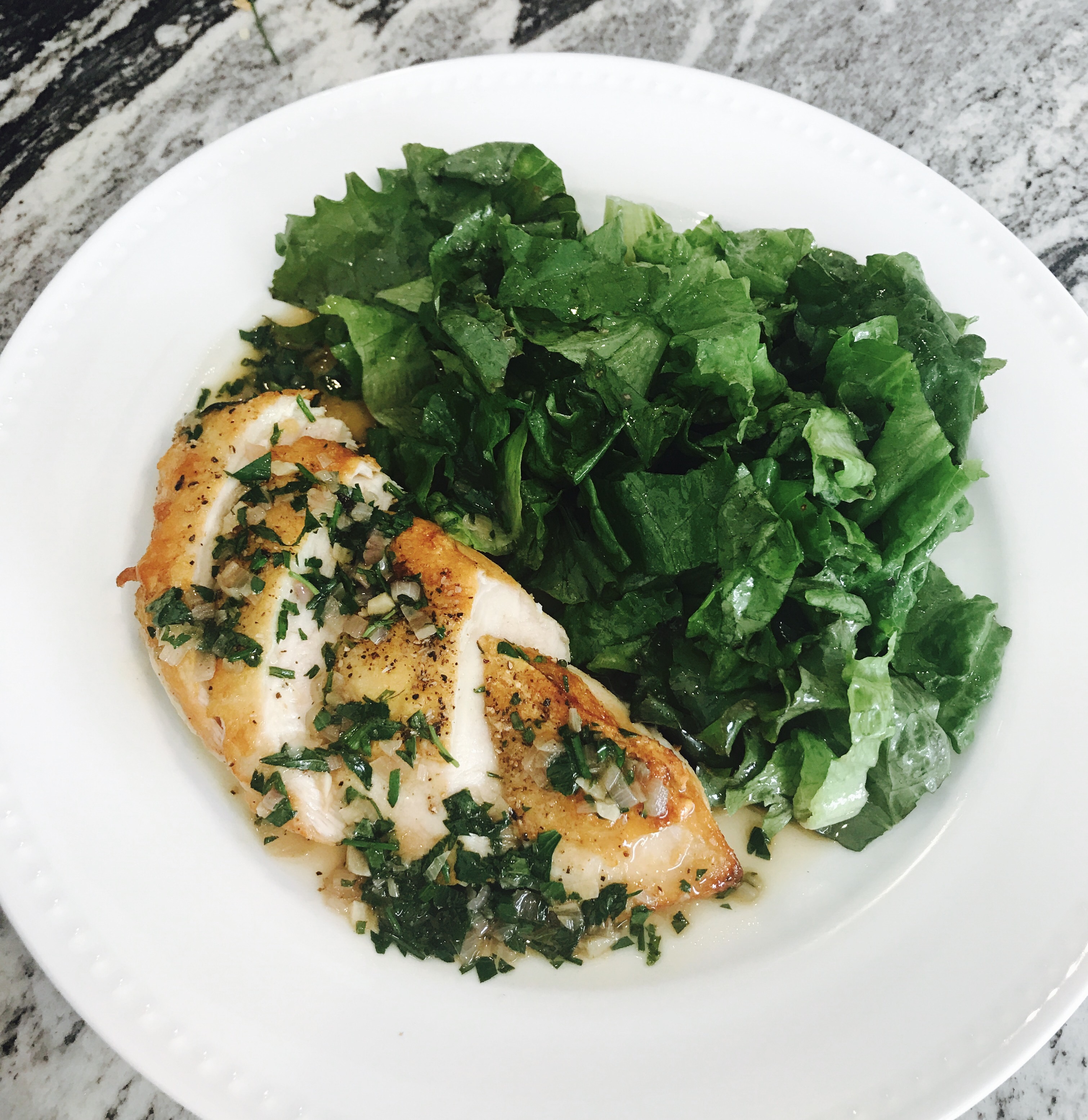
The one where we talk about Roasted Chicken and Pan Sauce


There’s such beauty in the simplicity of a great roasted chicken breasts, hugged by a sauce generated from its own comforting flavors. (Ugh I think that was the most Pioneer Woman-esque sentence I’ve ever written). That being said…for a simple dish, there are a lot of steps needed to bang this out and a handful of places where it can all go wrong. Don’t worry though, ya girl Chelsea’s here to troubleshoot for you. Here’s the four main things to keep in mind:

  • The Cut. This recipe is not for boring and deceptively expensive boneless skinless breasts. Chicken thighs and legs are delicious, but for another post. You need skin-on split breasts for this–don’t worry, I’ll show you how to de-bone them.
  • Get A Thermometer Already! Your chicken, steaks, pork chops, everything you sear, grill, or roast will never taste good until you shell out the whole $15 for an oven-safe thermometer on a wire, so you can check the temperature without having to constantly open and close the oven. Plus you can set an alarm, so you’ll know the very second your meat comes to temperature. One of the most important tools you can have! It’s the trick to having perfectly done, moist meat.
  • The Pan Sauce. Yup, that mystical and delicious thang. I’ll be honest, even with a little help from my buddies gelatin and cornstarch (thanks Kenji!) it still sometimes doesn’t thicken up the way I want it to.  If I were REALLY looking for a viscous gravy I could take a roux thickening approach, but that will yield a really heavy sauce. Unless you’re serving mashed potatoes it’s really unnecessary. Your pan sauce will still pack an awesome punch of flavor even if it doesn’t turn into a restaurant-like syrupy glaze.
  • Time. Because there’s butchery and chopping of vegetation involved, plan for about 45 mins to an hour for this to all come together. Good things can’t be rushed!

You’ll Need

  • Skin on split chicken breasts, one per person
  • Kosher salt and several grinds of pepper
  • Olive oil
  • A small shallot
  • A clove of garlic
  • 1/2 a cup of white wine
  • 1/2 a cup of chicken broth
  • 1 packet of gelatin (optional but helpful)
  • 2 tablespoons of butter
  • A little cornstarch
  • Soy sauce (trust)
  • Honey 
  • 2-3 tablespoons of fresh herbs, whatever is at hand (parsley, chives, tarragon, dill, or rosemary)

The Method

  1. Set the oven for 425 degrees F. Pour the chicken broth into a cup with the gelatin, whisking together with a fork. It’ll need some time to gently re-hydrate. Chop the shallots, garlic, and herbs.
  2. Nextt we’ve got to de-bone the chicken. Basically, you’re going to make a diagonal slice through the chicken, as close to the bones as possible, in fluid strokes so the portion doesn’t get all hacked up. Hold the sharpest knife you have with your dominant hand, and wrap the other hand in a towel, using it to stabilize the meat. Go slowly, separating the breast and the bones like a book. When you’re almost all the way through, your knife will hit a small rogue bone–use small controlled cuts to gently remove it. Now you’ve got yourself a skin on chicken breast, just like the restaurants! Okay not like the restaurants, if this is your first time doing this is probably looks like an uneven piece of crap. It gets wayyyy easier with practice, you’ll be an expert in no time. Flip the chicken over, there will be a distinctive “loose” section. That would be the chicken tender. Pull that off and throw in a plastic bag in the fridge to cook later in the week. Coincidentally, it should make your chicken portion more even! Even meat = even cooking. Check out this link for more in-depth instructions.
  3. Toss a few good glugs of olive oil in an oven-safe frying pan and set it over medium heat. Salt and pepper both sides of your newly butchered chicken breasts and put them in the pan, skin side down. Fry until the skin is golden and crisp, about 5-6 minutes. You’ll know when it’s ready because the chicken will release easily from the pan, not sticking at all. Monitor this stage carefully–you want golden chicken skin, not burned! Flip the chicken over, insert your thermometer into the center of the thickest part of one of the breasts, then cook until the thermometer hits 158 degrees F. Remove from the oven and set on a plate or a cutting board to rest for 10-15 minutes, or however long it takes you to make the pan sauce. The chicken’s temperature will spike another 10 degrees or so as it sits, finishing the chicken then redistributing the juices as it cools. Note: if you’re cooking for a big crowd, you can skip the frying pan part and stick the seasoned chicken skin-side up in a roasting straight into the oven. Broil the last few minutes of cook time to get that crunchy, golden brown skin. The pan sauce will turn out a little less chicken-y, but that’s a small sacrifice if you’re entertaining.
  4. Set the same chicken pan over medium heat with some olive oil and whatever is left in the pan (all that juice, chicken fat, and browned bits are a flavor goldmine!). Keep an oven mitt handy for adjusting the pan–the handle will be super hot! Sauté the shallot in the pan for 8 minutes, adding the garlic for the last 2. Add the wine, and use a wooden spoon or a whisk to scrape up all the browned bits from the bottom of the pan. (PS, this is called deglazing!!). Add the gelatin-y broth, crank up heat to medium high, and let the liquid bubble and reduce by about half.
  5. Drop the butter into a small bowl of cornstarch so it’s nice and coated with it, then add to the pan sauce along with a splash of soy sauce (umami bomb!) and a little drizzle of honey. Let the cold butter bubble with the sauce, at a hard boil for at least 30 seconds. Cut the heat, then add the chopped herbs, stirring constantly. This sauce will thicken like whoa as it sits, so slice up the chicken and serve soon after you finish. This would be clutch with roasted potatoes, roasted veggies, and a simple salad on the side. Pan sauce love for all!

Remix The Dish: this is the recipe for a classic and simple pan sauce, but there’s a million ways to tweak it depending on what flavor you’re going after. Try adding in Dijon mustard, orange marmalade, blackberry or cherry preserves, red wine, maple syrup, or vinegar. Taste and taste again to identify what’s missing, and use your brain and your pantry to tweak it until it tastes the way you want it to.


Also: here’s a funny little Snapchat video of me making this. The production value is just outstanding.
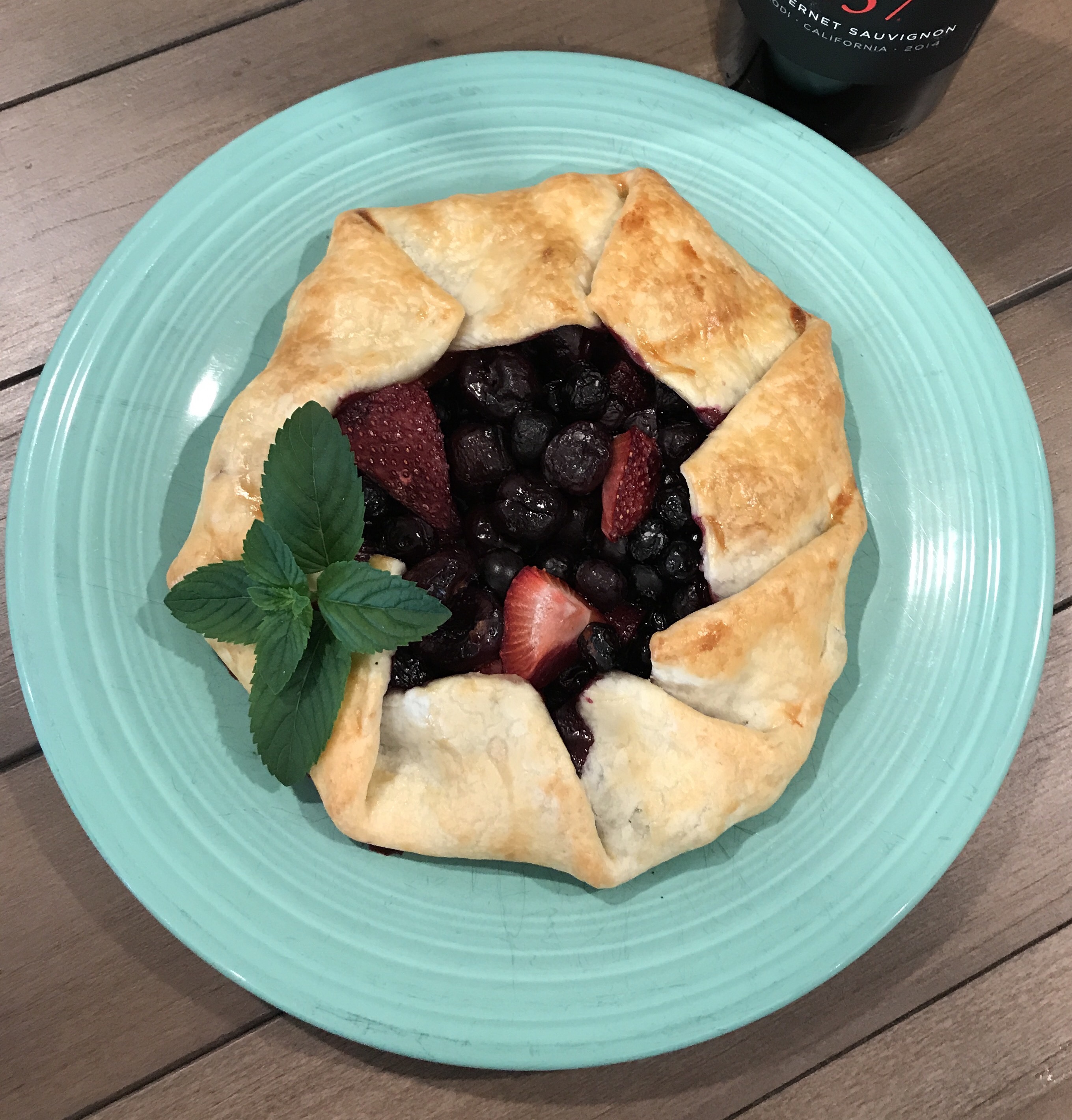
Super Easy Fruit Galettes


I love a good dessert, but if I’m going to expend the calories it better be a DAMN good dessert. No donuts or office birthday cake for me. Gotta be something clutch. 

I made these galettes last week while my book club girlfrans drank wine and gathered around my kitchen island. A galette is basically a free form pie, which effectively solves the crust-to-filling ratio problem we all bemoan. It was an easy dessert that looks disproportionately gorgeous compared to how fast it comes together. Seriously, if you use fruits that don’t require prep (raspberries, blueberries, or blackberries) it’ll be ready to bake in 3 minutes. This is also one of those recipes that’s great if you have a bunch of fruit that’s passed its prime. The pie application will give them new life!

Borrow one from Sandra Lee’s book and pick up a pre-made pie crust from the refrigerator section of the grocery store. I’ve included a recipe for insanely delicious whipped goat cheese, but no shame in using a tub of Cool Whip or a scoop of Bluebell. This is about getting maximum impact while expending minimal energy. I have lots of gatherings the rest of this 4th of July weekend, so I plan on making about 8 more of these in the next few days.

(Recipe makes 2 galettes. Each galette serves 4 non-dieting people).

You’ll Need

  • 1 package of pre-made pie crusts (should include 2 crusts in the pack. Buy the kind in a flat box, not the ones in a pie crust). 
  • 4 heaping cups of fresh or thawed frozen fruit. Strawberries, blueberries, cherries, raspberries, blackberries, peaches, or a combo (highly recommended) will be good
  • 3 tablespoons of sugar
  • 1 tablespoon of cornstarch
  • Kosher salt
  • 1 egg
  • 4 oz of plain or honey goat cheese, set out for an hour or so, so it’s room temperature
  • 3/4 a cup of heavy cream
  • Fresh mint (optional)

Method

  1. Thaw pie crusts if they’re frozen. Unroll on a lightly floured surface.
  2. If your chosen fruit needs prep work, go ahead an hull strawberries and cut into fourths, rinse berries, sliced peaches into 1 inch pieces, or de-pit cherries. I didn’t have a cherry pitter so I did a whole pint by hand. It was super fun. Put the fruit in a mixing bowl and toss with the sugar, cornstarch, and a pinch of salt.
  3. Divide the fruit mixture in two and plop them in the middle of each of the pie crusts. Some of the powdery mixture will be leftover in the mixing bowl, which is totally fine. Take the edges of the pie crust and gently fold them over each other going in one direction, so it makes kinda a pinwheel with about half of the berries’ total surface area covered. This is supposed to look super rustic, so just go it! No need for do overs.
  4. Beat an egg with a splash of water and brush over the top surface of the pie dough with a brush. If you don’t have a brush, be ratchet and gently drizzle and rub it on with your fingers. You don’t want to skip this step, trust me, your pies will come out all pale and pasty looking. Not great. Bake at 425 degrees F for 25 minutes.
  5. While the pie bakes, whip the goat cheese, heavy cream, and a pinch of salt in your fancy pants Kitchen Aid mixer (or use a hand mixer. If all you have is a whisk I guess you’re fucked). It should be soft and luscious but not super airy, kinda like Cool Whip, and taste like the most delicious thing you’be ever tasted. You can use this goat cheese crema in a million different applications–its light tang tastes amazing with sweet berries, but it would taste amazing in savory dishes like beet salad, on a baked potato, dolloped over a soup, or with any roasted veggie you can think of.
  6. Cut the pies in quarters and serve with the crema and mint leaves for garnish.

*Note: when you bake, it’s almost guaranteed that some of the berry juice will overflow, jacking with the instagram-worthiness of your final product. This my friends is why mint sprigs are you BFFs. Artfully cover them up and you’re good to go.

Remix The Dish: this would be so clutch if you omit the sugar and use cherry tomatoes or carmelized onions as the filling instead. Garnish with basil!

Hearts on Hearts Salad, and a chat about making creamy dressings


So I’m aware this is kind of a non-recipe recipe. You guys aren’t morons, you know how to assemble a salad. So rather than give you a play by play on how I sliced the cherry tomatoes in half, I’m going to talk about the one interesting part of this dish–the cool, tangy, vegetal, creamy yet super healthy and guilt-free dressing I made for this salad by blending up a couple of jars of hearts of palm with Greek yogurt.

Wait, what?!

Greek yogurt is great, but would be bland AF as a salad dressing without a little help from its friends. This works out perfectly with hearts of palm, a delicious but strange (and expensive!) little veggie that I never can seem to get enough of. By turning it into a creamy dressing, you get a hit of heart of palm flavor in ever single bite of your salad.

Here’s my general formula for making a greek yogurt sauce:

Greek Yogurt + Veggies + Pop of Flavor + Oil + Acid

Here are some examples:

Greek Yogurt + Jalapenos + Cilantro + Olive Oil + Lime Juice

Greek Yogurt + Roasted Red Peppers + Garlic + Avocado Oil + Red Wine Vinegar

Greek Yogurt + Roasted Shallots + Roasted Garlic + Olive Oil + Lemon Juice

Greek Yogurt + Sun Dried Tomatoes + Shallots + Walnut Oil + Balsamic Vinegar

Greek Yogurt + Mandarin Oranges and/or Pineapple + Honey + Coconut Butter + Yuzu (imagine that on fruit salad or cinnamon pita chips!)

Greek Yogurt + that yummy leftover green sofrito we made the other day + Olive Oil + Lime Juice

On all these bad boys, its important to TASTE after you blend. At that point, you’ll know how much salt and pepper it needs, and how much water or liquid you should splash in to thin it out and make it the right texture. (Or, hell you could leave it thick and use it as a chip or veggie dip instead).

You’ll Need:

  • 2 cans of hearts of palm
  • 1 cup of Greek yogurt (regular, 2%, or fat free are all fine)
  • Zest and juice of 2 limes (if you don’t have a microplane, seriously wtf you’re a grown ass adult. Just kidding. Just the juice is totally cool).
  • Olive oil
  • Kosher salt
  • Pepper
  • Romaine lettuce, whole (hearts and leafy greens)
  • Bacon
  • Cherry tomatoes
  • Sliced pepperocini or banana peppers

Method

  1. We’re going to start by crisping up the bacon, since that step will take the longest. Take the entire mass of bacon out of the vacuum pack and slice into 1/2 inch strips, crosswise. Throw it in a skillet on MEDIUM LOW heat, and SLOWLY render out the fat until its all brown and crunchy AF, stirring every few minutes and using a wooden spoon to break up the stacked bacon pieces. This is going to take awhile, 20-25 minutes to do it right. You’re going to look at it 10-12 minutes in and panic because it will look more like Canadian bacon (gross) than delicious deep rosey brown crunchy stuff we all know and love. But trust ya girl Chelsea, this is the guaranteed way to get it completely rendered, crispy, and perfect.
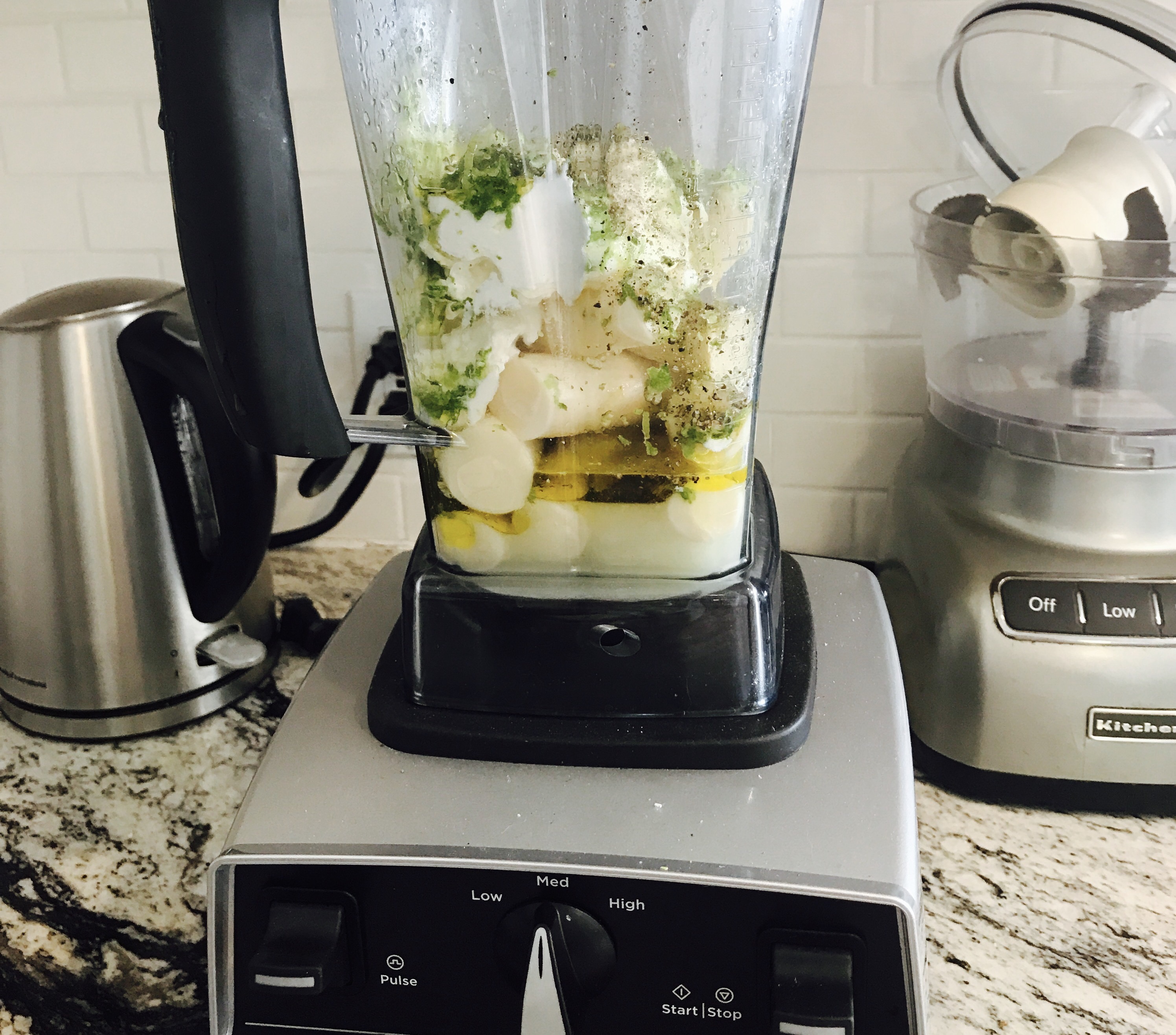
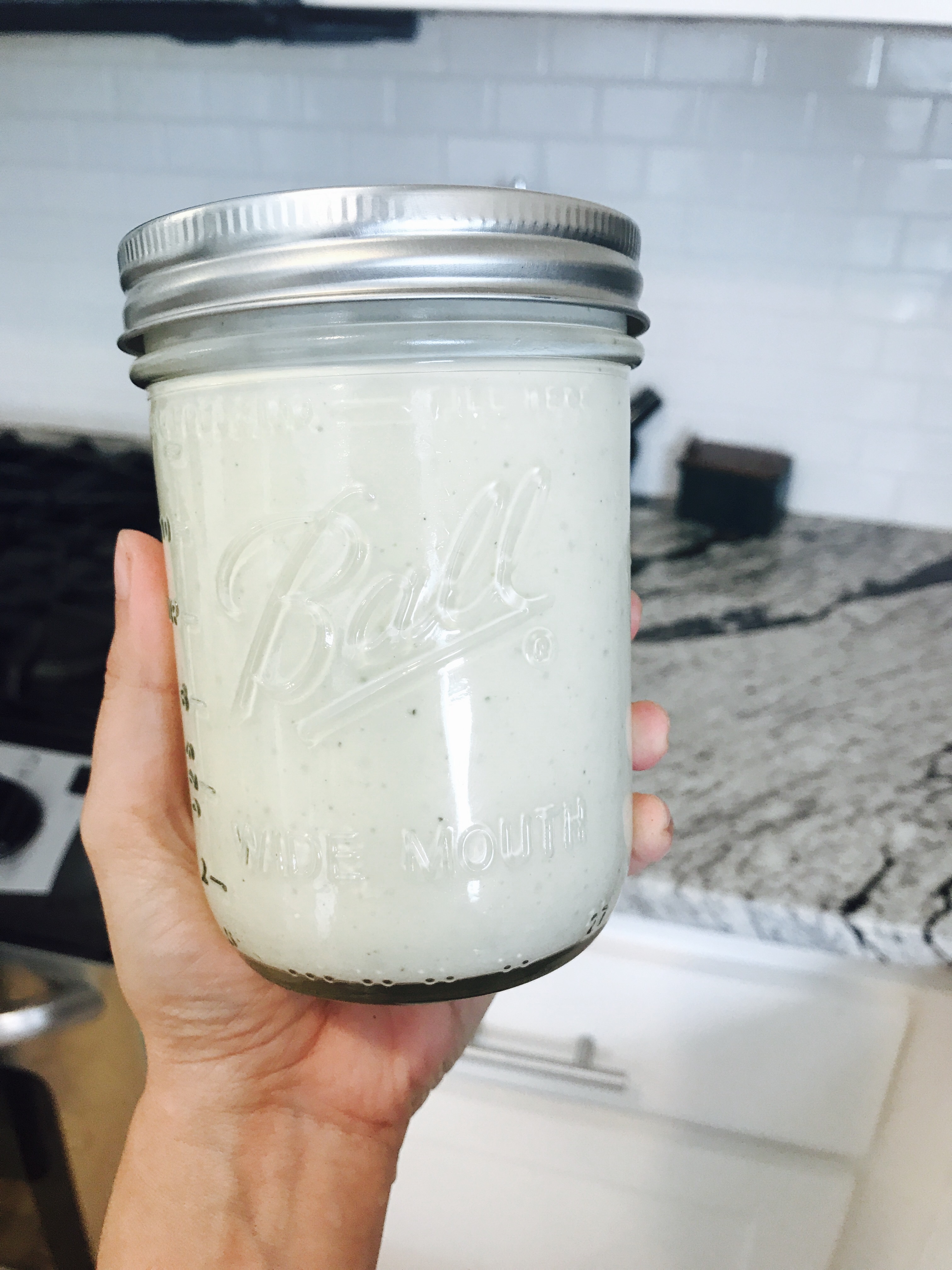
  2. While the bacon is frying, making the dressing. Open up the cans of the hearts of palm (reserving the liquid) and roughly chop each piece into 2 or 3 pieces. Go ahead and snag a few bites, hearts of palm make delicious snacks–basically log-shaped artichokes! Toss them all in the blender, then add the Greek yogurt, the lime zest, the lime juice, 4-5 good glugs of olive oil, a pinch of salt, several grinds of pepper, and a small splash of the reserved heart of palm liquid from the cans (for extra hearty palmy flavor). Give it a good blend, and after about a minute, stop the blender to scrape down the sides and taste. From there, use your senses to see whether it needs more salt, pepper, or liquid to thin it out. Blend until smooth, pour in a couple mason jars, and chill in the fridge until you’re ready. This dressing will keep for a week or so, and tastes awesome on anything…more on that later.
  3. Chop up a head of romaine. I’m the waste not want not type, so I used everything from the leafy greens to the very end of the heart. Plus it gives your salad lots of color and textural contrast. Measure out however much lettuce you’ll need in a bowl, and throw the rest in a plastic bag to use later.
  4. Slice the cherry tomatoes in half. You can figure this one out yourself.
  5. The bacon should be about done! Turn off the stove and use a slotted spoon to scoop the bacon out of the sizzling oil, onto a stack of paper towels to drain. Let the bacon fat cool for about 20 minutes, then pour it into a mason jar and throw in the fridge or freezer to use at a later time. You definitely don’t want to waste that flavor goldmine. If you have extra bacon bits, they keep well in the fridge too. They won’t be as snappy, but will still taste awesome.
  6. Sprinkle the bacon, tomatoes, and peppers on top of the lettuce and drizzle it with the heart of palm dressing. The tangy and spicy peppers play off the fresh and mild romaine, the salty bacon compliments the sweet tomatoes, and the heart of palm dressing brightens the whole thing.

Remix this dish: make this a complete meal by adding grilled or rotisserie chicken! The heart of palm dressing is super versatile—use it in place of sour cream on tacos, use as a dressing in potato or pasta salad, drizzle over gazpacho or any warm veggie puree soup as a garnish, use as a sauce on grilled meats and fish. The bacon fat is great for making vinaigrettes, for sauteing veggies, or while searing meats for braises.


Quick Mole Chicken with Poblano Rice


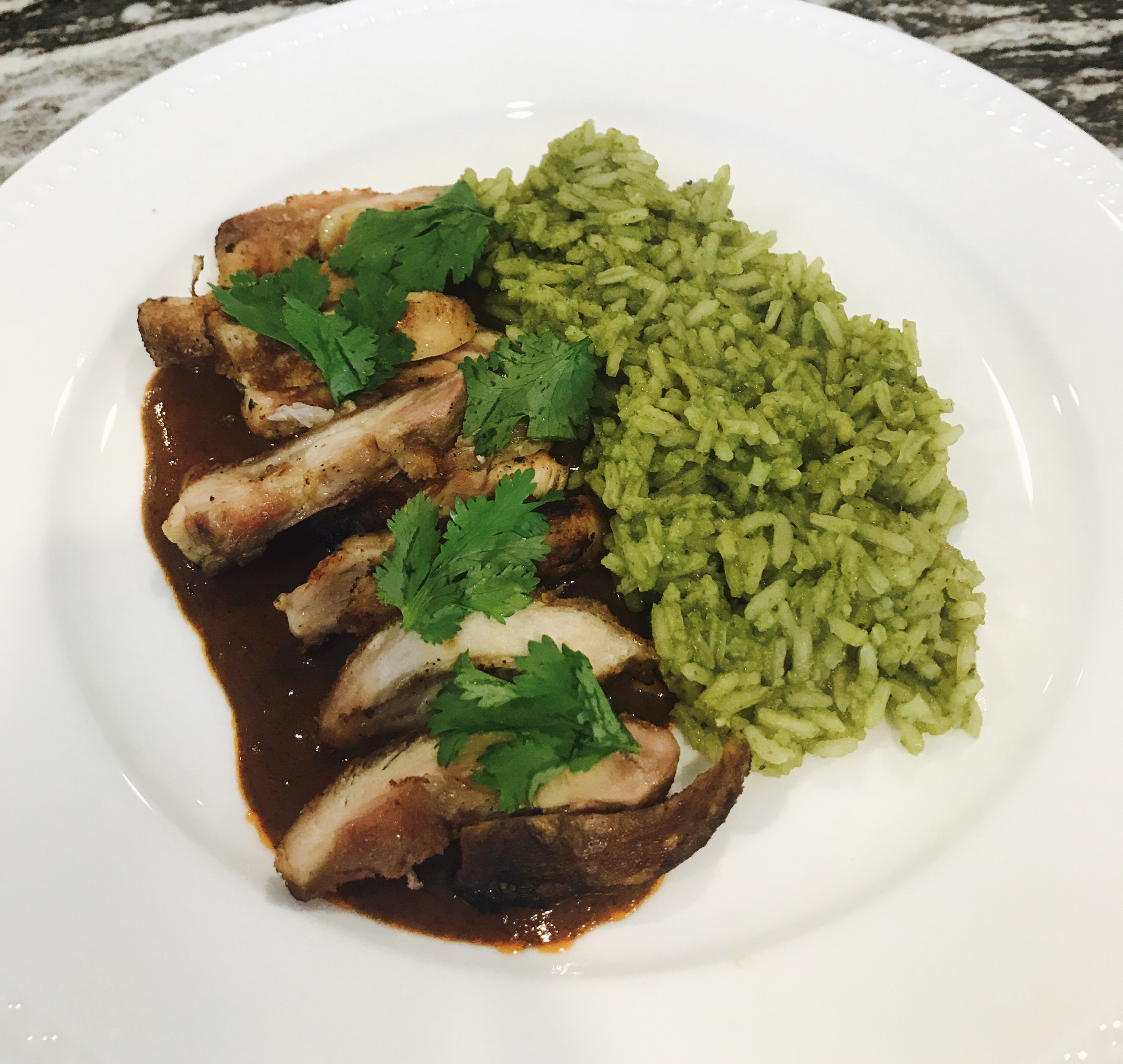
The same trip to Chicago that I visited Girl and the Goat, we also ate lunch at Frontera Grill. I’ve been a huge fan of Rick Bayless from seeing him on Top Chef and Top Chef Masters. He’s one of the most genial guys in the business and treats Mexican culture and cuisine with such a reverence. I ordered his chicken mole enchiladas, completely cleaned my plate, and they haven’t left my mind since.

Mole is a rich Mexican sauce, usually flavored with chiles, spices, seeds, fruit, and chocolate. I am for real. It sounds strange, but the spicy, sweet, and bitter notes come together in a thick dark sauce that just sings. Authentic mole is no joke–I’m talking 36 hours and 40 ingredients kind of tough. I was pretty stoked to find a well, completely bastardized version in the Chopped cookbook, made from pantry staples like peanut butter, soy sauce, cocoa powder, and chili powder. Somehow the peanut butter mimics the rich and complex sweetness you’d get from traditional sesame seeds and dried fruits normally used, and the soy sauce give the sauce a hit of umami flavor. It’s nowhere near the version an Abuelita would make, but my modifications made a tasty approximation, especially when compared to the freaky motor oil concoctions sold in jars at the grocery store.

The poblano rice is visually stunning and will keep well for several days. Save time and upcycle what’s in your fridge by using a rotisserie or leftover grilled chicken.

You’ll Need:

For the Poblano Rice

  • 1 cup or basmati, jasmine, or any long-grain white rice
  • 3 poblano peppers
  • One bunch of cilantro
  • A shallot or half of a small onion
  • A clove of garlic (hell, use the pre-chopped stuff in a jar, whatever)
  • Olive oil
  • Kosher salt
  • Like wedges for garnish

For the Chicken Mole

  • Boneless, skinless chicken breasts or thighs (or save a step and use whatever chicken is leftover in your fridge)
  • Olive oil
  • 1 1/2 tablespoons of Chili powder (ancho is preferred but regular is fine)
  • 1/2 tablespoon of Chinese 5 Spice (can sub for cinnamon instead)
  • A clove of garlic, minced (or use a small scoop of the jarred version, it’s cool)
  • 1 1/2 cups of water
  • 3 tablespoons peanut butter
  • A heaping teaspoon of cocoa powder
  • Several big shakes of soy sauce
  • A big dash of sugar
  • A couple big squeezes of honey (optional)
  • Kosher salt

Method

  1. First we’re going to prep the poblanos. The peppers have a thick skin that tastes best when charred and removed (treat Hatch chiles the same way). Turn the oven up on a high broil, coat the poblanos in olive oil, set in a foil-lined roasting pan, then place directly under the broiler until they’re blistered and black, 8-10 minutes. Flip the poblanos over and broil the other side until they’re good and charred. Let the poblanos sit on you kitchen counter until they’re cool enough to handle, 10-15 minutes.
  2. While the poblanos cook, start the chicken. Toss in kosher salt and a dash of th Chinese 5 Spice and chili powder,  then sear in a skillet with a little oil over medium high heat for about 3 minutes on each side. Remove and set to the side on a plate (they won’t be cooked through yet). Don’t wipe out your skillet, those leftover browned bits of chicken are a flavor goldmine! Obvi, skip this step if you’re using leftover chicken.
  3. Toss a little more oil into your skillet, and over medium heat, toast the 1 1/2 tablespoons of chili powder, 1/2 a tablespoon of Chinese 5 Spice, and minced garlic, stirring constantly with a wooden spoon for about 30 seconds. Add 1/2 a cup of water and use your spoon to scrape up any browned bits from the bottom of the skillet. Whisk in the peanut butter, cocoa powder, soy sauce, sugar, and a dash of kosher salt, and let bubble and thicken over medium heat for 4-5 minutes. THIS IS IMPORTANT: you must taste the sauce at this point and use your spidey senses to figure out what it needs to make it taste balanced and delicious. Needs more spice? Add more chili powder or some cayenne. Lacking in flavor? Add more kosher salt. Mine was a little thin and I couldn’t taste the sweetness, so I drizzled in honey and it made it perfect. If you’re cooking fresh chicken, add them and any accumulated juices back to the skillet and coat in the sauce. Turn on low and let simmer for 15-20 minutes.
  4. Back to the poblanos. Use your hands to gently peel the skin off the peppers and remove the bulk of the seeds. Throw them in the carafe of a blender, along with a clove of garlic, a peeled shallot, and a dash of kosher salt. Chop off the stem base from the bundle of cilantro and toss into the blender as well, then blend until smooth (scrape down the sides of  the blender if you need to). You’ve now got yourself some bangin’ green soffrito! Pour half into a jar to store in the fridge and use later (we’ll get to that) and set the other half aside to use in the rice.
  5. Pour a couple teaspoons of olive oil and the rice into a small saucepan and turn to medium heat. Stir the dry rice constantly, toasting it but watching to make sure it doesn’t scorch. You’re done when the rice turns opaque white, about 2-3 minute in. Toasting the rice gives it a toothsome texture and helps keep the granules separated, not sticky. This technique is what makes a rice pilaf a pilaf–it’s not just “rice with stuff in it” as that poor girl on Food Network Star believed. Once the rice is good n’ toasty, pour in 1 1/2 cups of water, a big dash of salt, and the rest of the poblano soffrito. Turn to low, cover, and let simmer for 15 minutes. Cut the heat and let it steam covered for another 5-10 minutes. Remove the lid and stir, so the poblano soffrito is well incorporated.
  6. Put the rice and chicken on a plate, and enjoy! Garnish with lime wedges and sour cream.

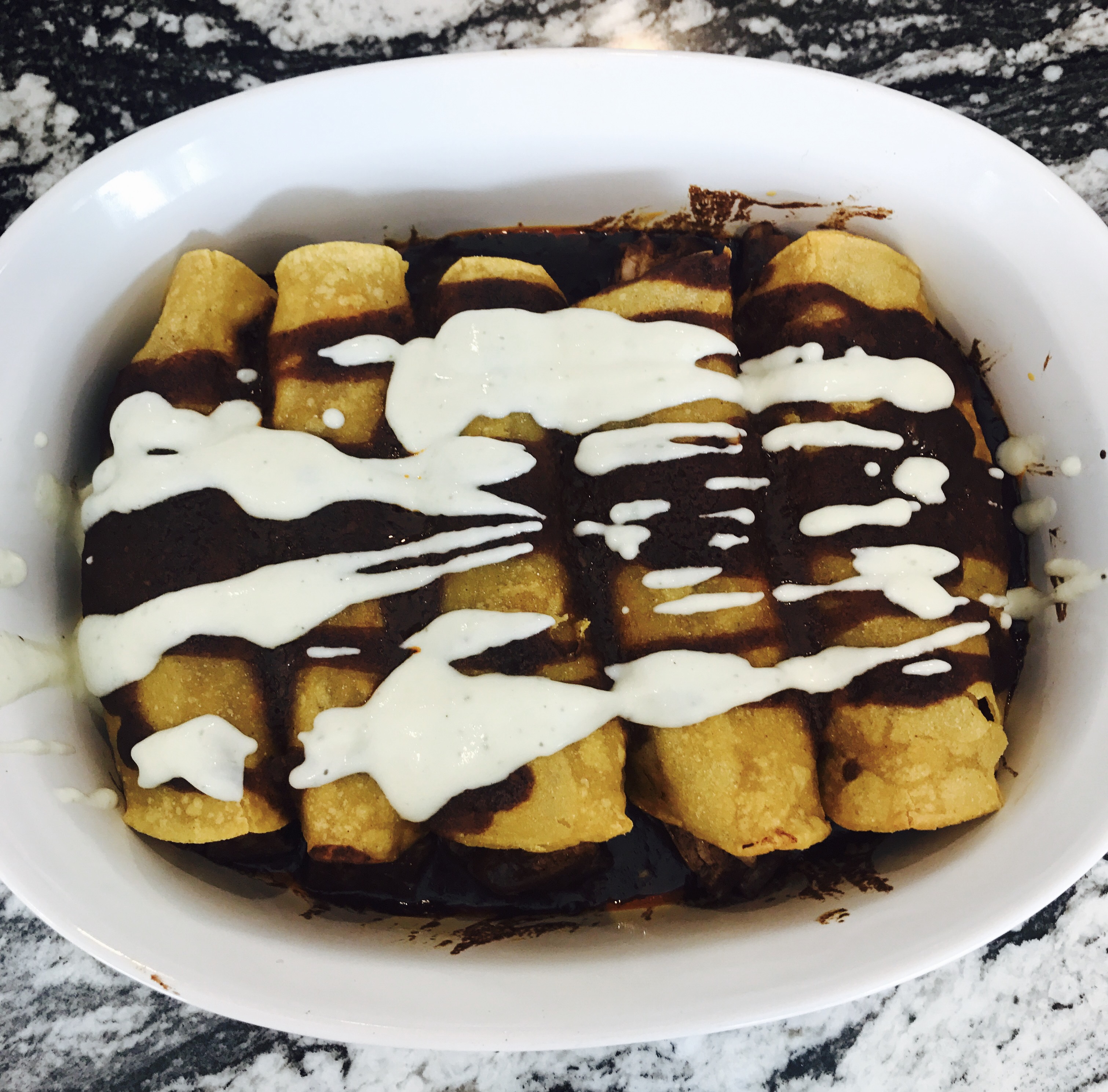
Remix The Dish: the next day I tossed some chopped chicken up with the leftover mole sauce, rolled them up in corn tortillas, and baked on 375 degrees for 20 minutes. BOOM insta enchiladas. The soffrito is great to have in the fridge as well–stir into eggs before scrambling, whiz in the blender with some Greek yogurt and a splash of water for a tasty sauce/salad dressing, mix with sour cream as a dip, or spoon over goat/cream cheese and spread over bread.


Girl and the Goat Roasted Cauliflower, and a little chat about flavors

I had the pleasure of visiting Girl and The Goat one week after the chef/owner Stephanie Izard won Iron Chef Gauntlet. That’s right, the first person to win Top Chef and become an Iron Chef is a woman, and her food is just as stunning as you’d expect.

We went family style and tried everything from goat belly to escargot ravioli to “pig face” to the most delicious shishitos I’ve ever tasted, covered in a crunchy layer of sesame and parmesan cheese. Stephanie is ballsy AF and understands how flavors work together.

When it comes to cooking on the fly, the most valuable skill you can possess is understanding what each component brings to the party. Knowing what an ingredient is supposed to accomplish empowers you to substitute with what you have at hand. Here are the flavor profiles we’re looking at in this dish:

Roasted Cauliflower = earthy, vegetal, soft

Parmesean = salty, umami, rich

Mint = fresh

Roasted Nuts = crunch

Pepperocini = acid, brightness, heat

Next time you take a bite of a dish with several components, think about how they all play off each other–how the sweet meat of a burger plays against a soft and buttery bun, crunchy lettuce, and tangy pickles, or how funky blue cheese works with fresh iceberg, salty bacon, and sweet tomatoes. A great plate combines several different flavors and textures, and this week I challenge you to contemplate this as you eat.

You’ll Need

  • A head of cauliflower (or be lazy and buy one pre-cut from the salad section, no judgement here)
  • Olive oil
  • Kosher salt
  • A handful of mint, chopped (can sub flat-leaf parsley or any leafy green herb)
  • 1/4 cup of roasted almonds (can sub whatever you have in the house–walnuts, pistachios, or even peanuts would accomplish the same thing. Stephanie used roasted pine nuts! Seeds or even crushed croutons work too)
  • 1/4 – 1/3 cup of shredded or grated Parmesan cheese (pecorino, manchego, or and hard and flavorful cheese would work fine)
  • Pepperocini rings (banana peppers, peppadews, jalapenos, or any spicy pickled pepper would work great)

Method

  1. Pre-heat your oven to 425 degrees F. Break the cauliflower down into 1-2 inch chunks. If you’ve never cut up a cauliflower before, I promise it’s way less scary then you’d think. They’re significantly softer than a spaghetti squash or even a cabbage, so no need to say your hail marys or feel like your fingers are living on borrowed time. I like to slice the thing into 4 big pieces then gently separate the florets from the leaves and thick center, using my hands or a small knife. The leaves and stem are edible (and delicious), but that’s for another post.
  2. Toss the cauliflower with about a couple good glugs of olive oil and a few big pinches of salt. Place on a baking sheet (cut side down for maximum browning) and roast until tender, 20-25 minutes. TIP CITY: when roasting veggies, in addition to tossing in olive oil, I also like to hit the baking pan with some Pam spray, as well as spritz the tops of the veg with it before popping it in the oven. Oil promotes browning, and browning = flavortown.
  3. While the veg roasts, rough chop the nuts and the mint. Have some ziploc baggies handy for the leftovers–the nuts and mint would taste awesome tossed with berries, sprinkled over a salad, or mashed into some goat or cream cheese.
  4. Remove cauliflower and toss in a serving bowl with the parmesan. Taste for seasoning, and add more cheese or a little more salt if necessary. (If your nuts are salted, keep this in mind! Nothing shuts down a party like too much seasoning). Sprinkle the mint and nuts on top. Finish by garnishing with the pepperocini.

Remix The Dish: try this cauliflower with peppadews and manchego cheese for a Spanish take, or use basil or cilantro, peanuts, pickled jalapeño, and omit the cheese for a Thai spin.

Look Mom, I Made A Blog!

chelseatulsa

Don’t act like you didn’t all see this coming from a mile away.

After years of fashion writing, a long stint as a columnist on a obscure, local, social blog, and a long-ass hiatus, ya girl Chelsea is back at it and ready to start writing again, this time about my one true love: my cavapoopoo Scoutman. Just kidding. I’m here to talk about food. I’d like to take this time to thank everyone who was just trying to being nice but unintentionally gave me an overinflated perception of my cooking ability and encouraged me to start this thing.

Now, I’m aware that blogging is generally nerdy AF and that you’re all probably taking screenshots and laughing your faces off in group text threads right now. Not going to lie, I would be doing the same thing. I included that ridiculous header photo for a reason. It’s cool though, I got over myself a long time ago. Everyone’s entitled to a hobby–you might like to sell beauty products or play rec soccer or paint pictures, I like to cook and write.

Granted, we all know I rock a desk job and haven’t been to culinary school or even worked in a restaurant. Everything I know, I learned through practice, reading books and websites, or from watching hours of Food Network and Top Chef. I’d be eliminated the first round on Chopped, Cutthroat Kitchen, or Masterchef Kids. But by everyday home cook standards, I definitely know what I’m doing, and would love to teach my friends and acquaintances some practical tips.

Because I’ve watched The Next Food Network Star for years, I’m aware that when dealing with something as universal as food, it’s important to have a distinctive point of view that makes your food and storytelling unique. After several minutes of consideration, here’s a breakdown of my culinary credo:

  • Nose to tail, root to leaf, tupperware to table. Food waste is something that bothers me to my core. I’ll spare you my hippie ideologies, and instead come at it from the practical cost-saving perks of adopting this outlook. There is a way to eat on a budget without sentencing yourself to the same dang casserole for a week straight. I’ll do my best to include ways to “remix” my all of my recipes and ingredients, and show ways to up-cycle food and make other delicious things to eat. Not only will you save cash, but you’ll save time and get your creative juices flowing to boot. I could wax poetic about honoring our resources, respecting ingredients, and my other crunchy spiritual thoughts, but that’s another post.
  • Learn not follow. Just as assembling an Ikea console doesn’t make you a brilliant woodworker, following an exact recipe doesn’t make you a good cook. It makes you good at obeying instructions. I’m going to give you a lot of approximates, talk about methods and skills, and hopefully teach you how to solve problems you may encounter. I’ll talk about what ingredients are optional, and which ones you can sub out for whatever’s in your fridge. Working with what you have saves money and makes you a better home cook. Hopefully, over time this will give you the skill set and confidence to go “off the book” and invent your own meals.
  • Eat your damn veggies. I know this is super judgy of me, but one of my biggest pet peeves are grown adults who won’t eat vegetables. You don’t have to like or even love them, but I have trouble relating to people who don’t at minimum tolerate veggies, if only just for sake of convenience. My husband Alex used to be one of those people. After nearly three years of ignoring his complaints, one day while eating a bowl of Sicilian chicken soup, he looked at me and proclaimed “wow, you get full so much faster if you don’t dodge the carrots and onions.” Who would have thought, right?
  • Enjoy the butter, okay? Or cheese. Or drizzle some olive oil. Or the kosher salt. You’re going to be way more satisfied eating flavorful food than you would be eating mountains of bland rabbit food. I’m obviously not a healthcare professional. Of course my philosophy doesn’t work for everyone, but I’ve found that I actually end up eating less by not depriving myself of the things that make food taste good. Don’t get me wrong, I’m not some kinda Paul Dean glutton. I make an effort to incorporate healthy substitutions, but ya know I’m also comfortable with my body’s perpetual and realistic softness. Also, I’m a bit distrustful of the processes uses to make things “fat free” or “fortified” or even “decaffinated.” Which leads me to my next rule…
  • Shop the perimeter. I’m a simple girl. I don’t pretend to know if organic fruit or grass-fed beef is worth it. There are TONS of practical benefits of genetically modified produce, but I’m open to the possibility that they could cause some negative freakonomic effects down the line. Plus, to be honest it’s not worth it to me right now to blow a bunch of money on free-range chickens from Whole Foods. (Plus the sheer volume of food that Alex consumes in a day is just astonishing). It’s common knowledge that the less processed foods you eat the better, as fresh food retains more nutrients. The way I keep myself on that path is by shopping the perimeter of the grocery store, and filling up my cart with perishable ingredients.

Let’s be real here. I’ve got a full time job, I try to fit in a workout everyday, I have a robust social life, and I dedicate at least two hours a night to watching Netflix. I’ve also got a husband, two dogs, a cat, a garden, and a big kid house to take care of. This is just a creative outlet and an fun way to document recipes (and maybe teach some friends a little bit about food). I’m not going to optimize my photo dimensions for Pinterest. I don’t have a DSLR camera, so all of the photos here will be taken with my iPhone and video will be cut on Snapchat. *Maybe* you’ll get an occasional Instagram filter.  My content will probably be a little sporadic…I mean, I do have TV shows to binge and stuff. I’ll probably write these posts on my iPhone in the 15 minutes after dinner that it takes Alex to throw tennis balls and tire out the doggos, so ya know give me a break.

In exchange for my less than dazzling images and prose, I will promise you guys few things: I’ll never have a stupid long rambling intro before I get to the dang recipe. I’ll never use the word “wanderlust.” The very nature of talking about food is pretentious in itself, but I’ll try to keep it in check. I won’t write in the cliche “little ol’ me” meet-cute romantic comedy ingenue voice that every other Mommy-blogger adopts. I’ll do my best to stay away from humble-braggy lifestyle porn because those people are just the worst.

Let’s all just be cool, hang out, laugh at the bizarro things I find entertaining, and talk about food, k?

xoxo, Chelsea